Turnips and Radishes Deserve a Raw Winter
Cold nights make white turnips and red radishes sweeter and crisper. Here is how to choose, store, slice and season them so they become the easiest raw vegetables of the cool months.
 Arjun Mehta
Food Photographer & Stylist
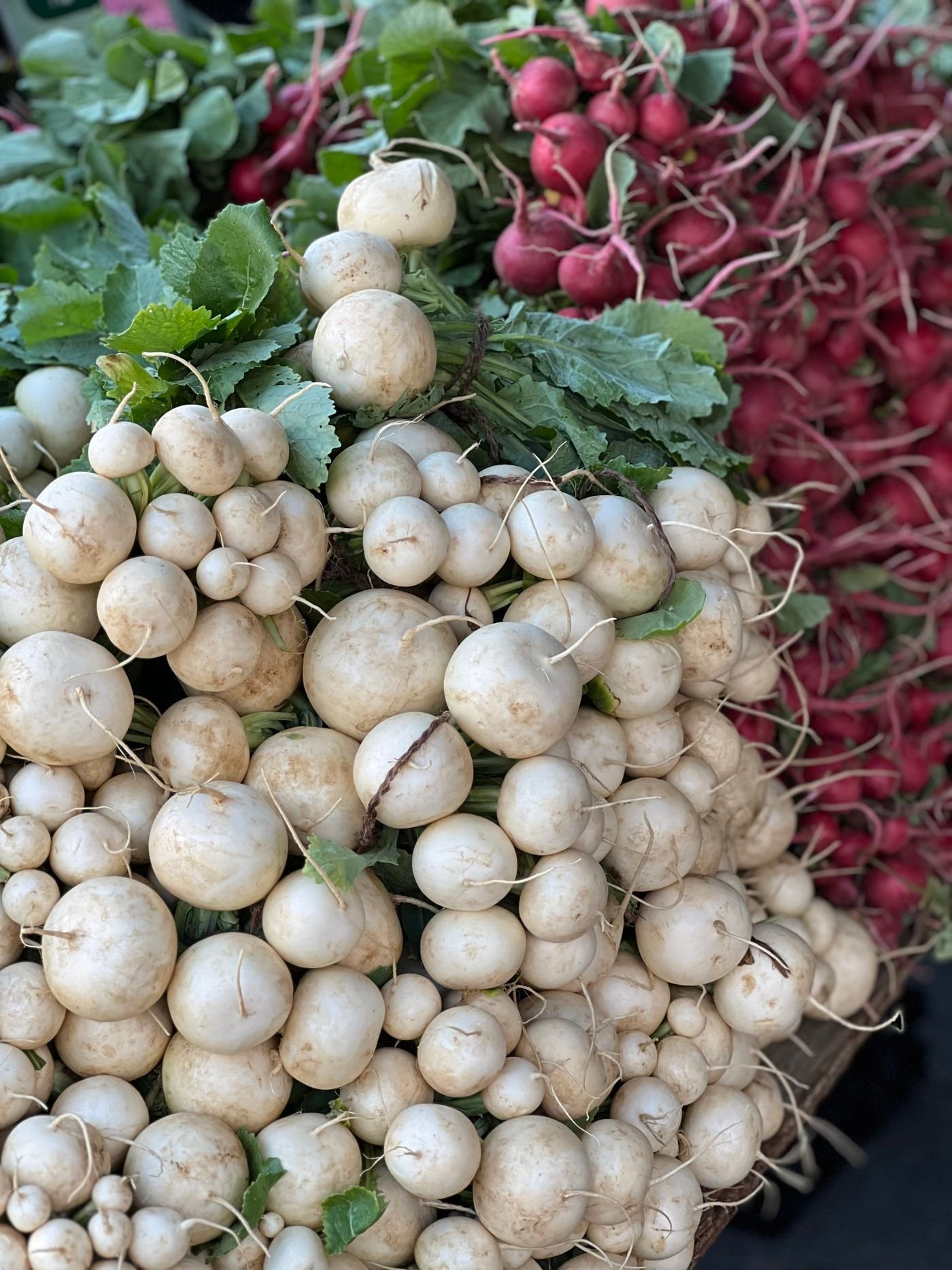
Every November the market tables start to look a little sparse, and that is exactly when I get excited. The summer tomatoes are gone, the peppers are winding down, and in their place come heaps of white turnips and red radishes with their leaves still attached. Most people walk past them on the way to the apples. I stop and fill a bag.
Turnips and radishes are two of the easiest vegetables to eat raw, and they are at their best when the weather cools. Cold nights push sugars into the roots and soften the sharp edge that summer radishes can have. If you have only ever eaten turnips boiled into something gray and bitter, a raw one sliced thin will surprise you.
Choosing Good Roots
Size matters more than anything else. Look for turnips no bigger than a golf ball or a small plum. Small Japanese-style white turnips, sometimes sold as salad turnips, are ideal. They are sweet, juicy and so tender you do not need to peel them. Larger purple-top turnips can be eaten raw too, but they get woody and more pungent as they grow, so save those for grating into slaws where a little bite is welcome.
For radishes, press gently with your thumb. A good radish feels as firm as a marble. Any give at all means it has started to go pithy inside. The leaves are a useful freshness gauge: perky green tops mean the bunch was pulled recently, while limp, yellowing tops mean it has been sitting around.
- Pick turnips under 2 inches across for eating whole or sliced
- Choose radishes that feel hard, with smooth, unsplit skin
- Buy bunches with the greens attached whenever you can
- Skip anything with soft spots, cracks or a spongy feel
Storing Them So They Stay Crisp
The first thing I do at home is cut the greens off, leaving about half an inch of stem. The leaves keep pulling moisture out of the root, and a bunch left intact overnight will already feel softer by morning. Store the roots in a container in the crisper drawer with a damp cloth over the top. They will stay crunchy for a week or more.
The greens are a separate project. Wash them well, because grit hides in the stems, spin them dry and wrap them loosely in a towel. Use them within two or three days.
If a radish does go a little soft, drop it into a bowl of ice water for 30 minutes. It will not come back to perfect, but it firms up enough for slicing.
How to Cut Them for Raw Dishes
Raw roots live or die by the cut. A thick wedge of turnip is dense and a bit aggressive. The same turnip shaved on a mandoline into slices you can almost see through becomes delicate and sweet. I use three cuts most often.
Paper-thin rounds are for layering, like a carpaccio. Fan them on a plate, drizzle with lemon and olive oil, scatter flaky salt and let them sit for ten minutes. The acid softens them just enough.
Matchsticks work best in slaws and wraps. Cut the root into thin planks, stack the planks, then cut across into sticks. They hold a dressing without going limp.
Quarters are for snacking and quick pickles. Halve small radishes top to bottom and they look lovely on a board next to a bowl of cashew dip.
Taming the Bite
Some radishes, especially the long black ones and the big daikon at the back of the stall, can be very peppery. You have a few easy options. Salt the slices lightly and let them rest for 15 minutes, then rinse and pat dry. This pulls out water and mellows the heat. A splash of rice vinegar with a pinch of coconut sugar does the same job while adding flavor. Pairing with something rich also helps: avocado, tahini or a soaked sunflower seed spread will round off the sharp edges.
A Few Ways I Use Them All Winter
- Shaved turnip, sliced pear, walnuts and a mustard-lemon dressing
- Radish quarters tossed with dill, lemon zest and a little olive oil
- A quick pickle of radish rounds in apple cider vinegar, water and salt, ready in an hour
- Finely chopped radish greens blended into a pumpkin seed pesto
- Turnip matchsticks rolled into collard wraps with carrot and miso-tahini sauce
The thing I love most about these roots is how little they ask of you. No soaking, no dehydrating, no planning a day ahead. Wash, slice, season, eat. When the rest of the market feels like it is closing up for the season, turnips and radishes are just getting started.