Golden Beets Are the Friendliest Raw Root at the Farm Stand
Golden beets offer the sweet crunch of red beets without the staining, which makes them the perfect place to start eating beets raw. What to buy, how to prep them and what to pair them with.
 Diane Holloway
Founder & Editor-in-Chief
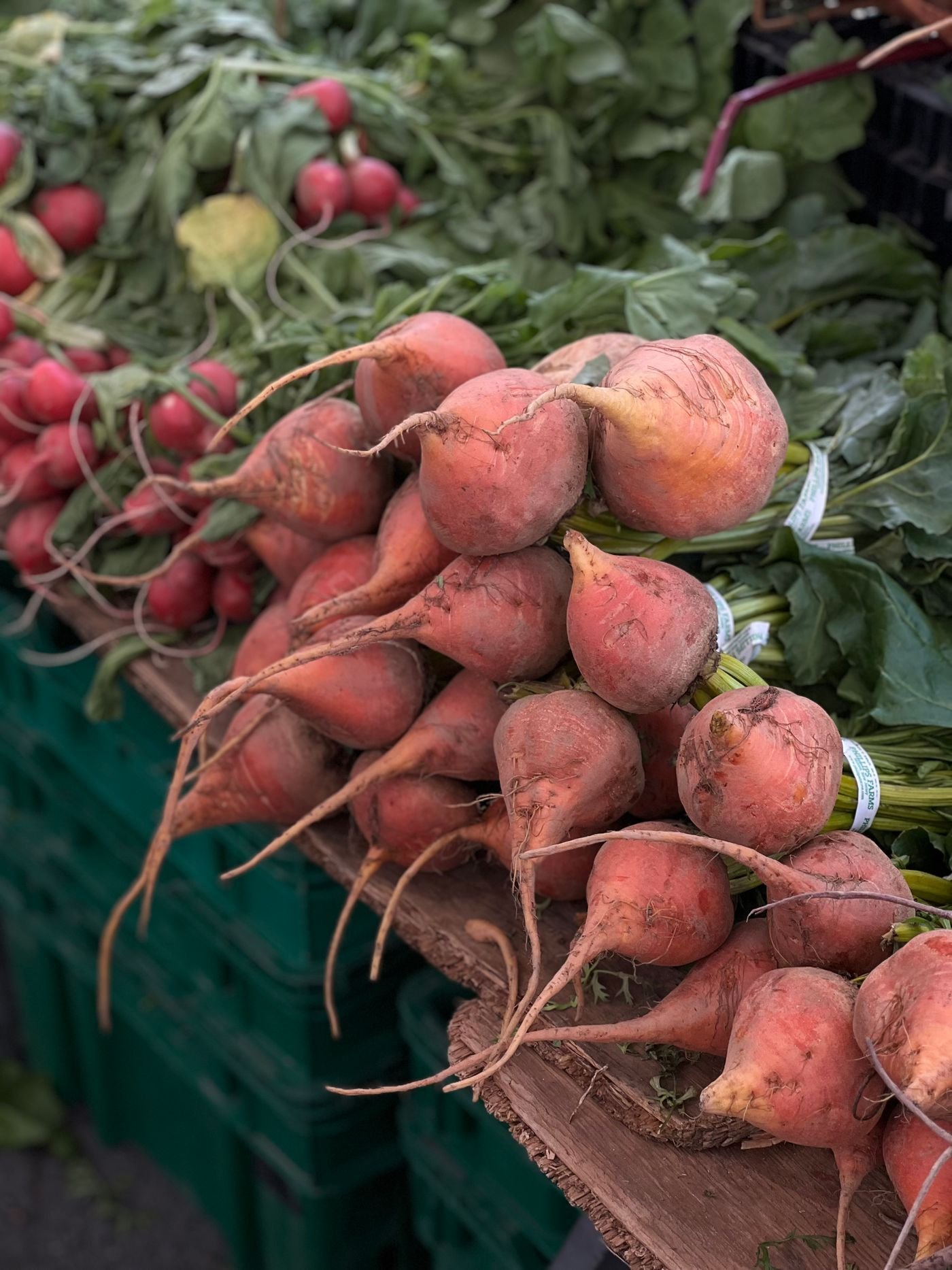
There is a farm stand I pass on the way home that stacks its beets in tidy bunches, leaves and all, like firewood. For most of the year the red ones dominate. Then in early winter the golden beets show up, and I buy them almost every week until spring.
If you have been hesitant to eat beets raw, start with the golden ones. They have the same sweet, earthy crunch as red beets but a milder flavor, and they will not stain your hands, your cutting board or everything else on the plate a vivid pink. That alone makes them far easier to work with while you are learning.
What to Look For at the Stand
A beet's leaves tell you most of what you need to know. Bright, upright greens mean the bunch was harvested recently. Wilted greens are fine for the root, but you lose the bonus of a second vegetable.
Then pick up the bunch and feel the roots themselves:
- Firm all over, with no soft or wrinkled patches at the shoulders
- Smooth skin without deep cracks or scabby spots
- Small to medium size, roughly 2 to 3 inches across, for the best raw texture
- A thin taproot still attached, which suggests they were handled gently
Very large beets are not bad, but they tend to be denser and slightly fibrous at the core. For raw dishes, I would rather buy two bunches of small ones.
Getting Them Home and Stored
Cut the greens off as soon as you get home, leaving an inch of stem so the root does not bleed or dry out. Leave the taproot on. Unwashed beets in a closed container in the fridge will keep for two to three weeks and stay crisp.
The greens are delicate by comparison. Treat them like chard, which is a close relative. Wash, dry, wrap in a towel and use within a few days. I slice the stems finely and use them like celery, and the leaves go into massaged salads.
Peeling and Prep
Golden beet skin is thin but can taste a little dusty, so for raw eating I usually peel it. A Y-shaped vegetable peeler is faster and less wasteful than a knife. Trim the top and the taproot first so the beet sits flat on the board.
Once peeled, the way you cut determines how you experience it:
- Spiralized into noodles, golden beets make a sunny base for a raw pasta with tomato and basil sauce
- Grated on the large holes of a box grater, they turn into a juicy slaw in a couple of minutes
- Shaved on a mandoline, they become thin coins for layering or wrapping around a filling
- Cut into small dice, they add crunch and sweetness to a tabbouleh made with cauliflower rice
A peeled beet will dull a little on the surface after an hour or so. It is only cosmetic, and a squeeze of lemon or orange juice keeps it bright.
Flavors That Love Golden Beets
Because they are milder than red beets, golden beets are good at carrying other flavors. Citrus is the obvious partner, and winter is exactly when oranges and grapefruit are best. These are the pairings I keep coming back to:
- Orange segments, fennel, mint and a few crushed pistachios
- Apple matchsticks, lemon, ginger and parsley
- Grated golden beet with shredded carrot, raisins and a tahini-lime dressing
- Thin slices marinated in olive oil, white balsamic and thyme for an hour
- Diced beet with avocado, lime, cilantro and a pinch of chili flakes
Marinating deserves a special mention. Thin slices of raw beet soaked in an acidic dressing for 30 to 60 minutes soften noticeably, almost as if they had been gently cooked. This is a good trick when you are serving people who are new to raw food and a crunchy beet feels like a big step.
A Simple Plate to Start With
My favorite introduction is almost too simple to write down. Shave two small golden beets as thin as you can. Arrange the slices overlapping on a plate. Scatter orange segments and torn mint over the top. Drizzle with good olive oil and a little of the orange juice left on the cutting board, then finish with flaky salt and chopped pistachios. Let it sit for ten minutes before eating.
It looks like sunlight on a plate in the middle of December, and it takes less time than setting the table. Once you have made it a few times, you will start noticing golden beets at every stand you pass and wondering why you ever walked by them.